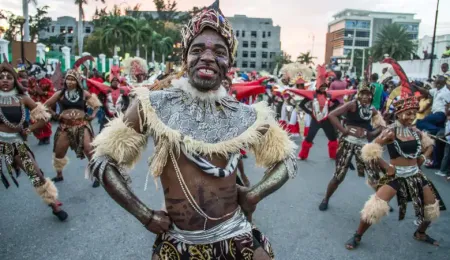

Haitian culture is bold, colorful, and deeply layered — a story woven from African, Indigenous Taíno, and French influences. From music and food to faith and art, Haiti’s identity is expressed through a vibrant mix of traditions that continue to thrive both on the island and across its global diaspora.
Language: The Voice of the People
At the heart of Haitian culture is Haitian Creole (Kreyòl Ayisyen), spoken by nearly the entire population. Born out of necessity during colonial times, Creole blends French vocabulary with African languages and Taíno words. French remains an official language, often used in government and formal settings, but Creole is the true voice of the people — the language of songs, stories, and everyday life.
Art: Color, Craft, and Expression
Haitian art is instantly recognizable for its vibrant colors, bold shapes, and storytelling. From intricate metalwork in Croix-des-Bouquets to vivid street murals in Port-au-Prince, art is not just decoration — it’s a way to share history, pride, and imagination. Paintings often capture daily life, spirituality, and folklore, while crafts like woodcarving and beadwork keep traditions alive and accessible to visitors.
Music: The Soundtrack of Haiti
Music in Haiti isn’t background noise — it’s the pulse of daily life. Konpa, a dance-driven méringue-based genre, fills clubs and parties with its irresistible rhythm. During Carnival and Easter, rara bands parade through the streets, blending horns, drums, and chants into electrifying celebrations. From Vodou drumming ceremonies to the global reach of Haitian jazz and hip-hop, music is a powerful connector between generations.
Cuisine: Bold Flavors with History
Food in Haiti tells its own story. Staple dishes like griot (fried pork), diri ak djon djon (black mushroom rice), and patties filled with spicy meat or fish reflect the country’s diverse influences. Meals are always communal, often shared with extended family or neighbors, turning eating into an act of connection as much as nourishment.
Religion and Spirituality: Faith in Many Forms
Haiti is home to a rich spiritual landscape. Vodou (often misunderstood abroad) blends West African traditions with Catholic rituals, creating a faith centered on healing, community, and respect for the spirits known as lwa. Recognized officially as a religion in 2003, Vodou exists alongside Catholicism and Protestantism, shaping art, music, and daily life.
Community and Family: The Heart of It All
Strong family ties and a sense of collective belonging are central to Haitian life. Whether through a neighborhood rara band, a bustling Sunday market, or a Vodou ceremony, Haitian culture thrives on gathering, sharing, and celebrating together.
Why It Matters
To experience Haitian culture is to step into a world of creativity, joy, and connection. Whether you’re dancing to konpa in Port-au-Prince, admiring art in Jacmel, or eating griyo with friends in Little Haiti, you’re taking part in a culture that continues to inspire and flourish across the globe.
Want to explore more?
Check out our directory to find businesses related to this article.
Browse Directory