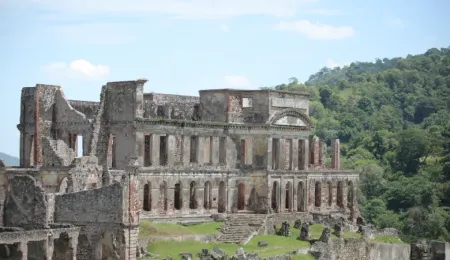
Perched in the northern hills of Haiti near Milot, the Sans-Souci Palace is more than a set of striking ruins — it’s a living testament to Haiti’s revolutionary spirit and cultural pride. Visiting this UNESCO World Heritage site is not just about sightseeing, but about experiencing the story of the world’s first Black republic in a place where history and beauty converge.
Built in 1811 by King Henri Christophe, Sans-Souci Palace was a bold statement to the world that Haiti had emerged strong and sovereign after defeating colonial powers. Even in ruin, the palace radiates grandeur, with wide staircases, arches, and the remnants of gardens and fountains that once dazzled foreign dignitaries. Standing here, you don’t just see history — you feel it.
A trip to Sans-Souci naturally pairs with a visit to the Citadelle Laferrière, one of the largest fortresses in the Americas, perched above the palace. Together, they form a UNESCO site that symbolizes Haitian ingenuity and resilience. The hike (or horseback ride) from Milot to the palace and then up to the Citadelle is a highlight for adventurous travelers.
The palace’s title, “Sans Souci” (French for worry-free), is layered with history. While it symbolizes Christophe’s vision of regal splendor, it also recalls the rival revolutionary leader Jean-Baptiste Sans Souci, who met a tragic fate at Christophe’s hands. Learning these stories onsite brings Haiti’s complex revolutionary past vividly to life.
Visiting Milot offers opportunities to connect with local guides, artisans, and restaurants. Hiring a guide (about $20–30, plus a horse fee if needed) not only enhances your visit with insider knowledge but also supports the surrounding community. After exploring, you can enjoy a hearty Creole meal at the popular Lakou Lakay restaurant, where hospitality is as abundant as the food.
While Haiti is famous for its coastline, the country’s northern region is a cultural and historical heartland. From Cap-Haïtien’s colonial streets to the revolutionary landmarks of Milot, this area offers travelers a deeper understanding of Haiti’s identity — and a chance to see the country beyond the typical tourist trail.
Practical tips: Cap-Haïtien is the best base for exploring, with a range of hotels and easy access to Milot (a 30-minute drive). The city’s international airport makes travel smoother without passing through Port-au-Prince. Plan at least half a day to explore both Sans-Souci and the Citadelle.
Sans-Souci Palace is more than just stone walls and ruins — it’s a symbol of resilience, pride, and the extraordinary story of Haiti’s independence. If you’re planning a trip to Haiti, visiting Sans-Souci isn’t optional. It’s essential.